Your company has committed to a major trade show. The booth space is booked, the travel is arranged, but a crucial question remains: how do you ensure this significant investment pays off? A successful trade show presence doesn't happen by accident. It’s the result of a deliberate and comprehensive trade show marketing strategy that connects every action—before, during, and after the event—to measurable business goals.
This guide will walk you through the essential components of building that strategy, transforming your trade show exhibit from a significant expense into a powerful engine for lead generation and brand growth.
Why Your Trade Show Strategy Is Your Most Important Asset
Walking onto a packed trade show floor without a solid strategy is like trying to navigate a new city without a map—you might stumble upon something interesting, but you're more likely to end up lost, frustrated, and with little to show for your efforts. It’s a costly gamble, and frankly, one your marketing budget can't afford.
For many marketing managers and exhibit coordinators, the biggest hurdle is justifying the hefty price tag that comes with exhibiting. A well-crafted trade show marketing strategy is your answer. It provides the framework to turn that expense into a revenue-driving machine, ensuring every dollar you spend is working toward a clear business objective. When you have a plan, you stop just showing up and start showing up with purpose.
From Hopeful to Predictable Results
Without a plan, you're operating on pure hope. You hope the right people wander by your booth. You hope your team can wing it and say the right things. You hope you collect enough business cards to make the whole thing worthwhile.
A real strategy trades hope for intention. It forces you to decide exactly who you want to attract, what message will grab their attention, and how you’ll pull them in from the noisy, crowded aisles.
This isn't just a "nice-to-have" anymore. The global trade show market is expected to hit $50 billion in revenue by 2025, and it's fueled by a powerful fact: roughly 81% of attendees have buying authority. With that much potential business at stake, going in unprepared is no longer an option.
Key Components of a Winning Strategy
A truly effective strategy weaves together several critical pieces. When you get these right, they create a seamless experience for both your team and your visitors, making sure nothing falls through the cracks.
- Crystal-Clear Objectives: First things first, define what a "win" looks like for you. Is it generating 100 qualified leads? Securing 10 meetings with C-suite executives? Or maybe boosting brand awareness among a new target audience by 20%?
- Pre-Show Promotion: Your marketing should start weeks, or even months, before the event. You need to build buzz with targeted email campaigns, social media sneak peeks, and direct outreach to key accounts to make sure your booth is a can't-miss destination.
- Booth Design and Experience: Your booth is your brand's physical home for a few days. The design has to do more than just look good—it needs to stop people in their tracks and make it easy to start a conversation. Thinking through your trade show floor layout and display options is a crucial part of this.
- On-Site Execution: Your people on the ground can make or break your event. They need to be trained to engage attendees, ask the right qualifying questions, and create an atmosphere that’s both professional and welcoming.
- Post-Show Follow-Up: The show isn't over when the lights go out. In fact, the most important work is just beginning. A structured, timely follow-up process is absolutely essential for turning those promising conversations into actual customers.
This chart really drives home the difference between having a plan and just winging it.
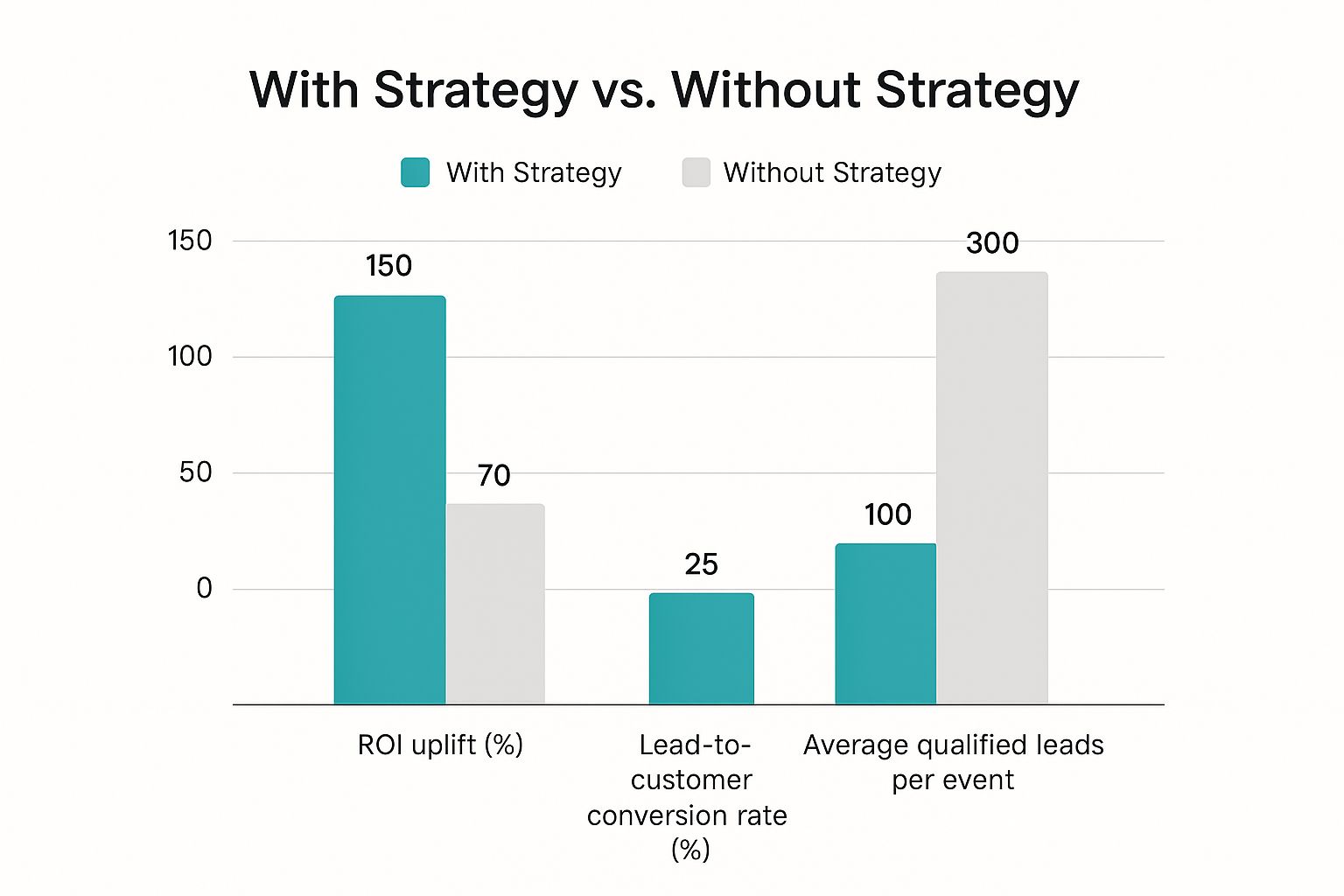
As you can see, a strategic approach has a direct and dramatic impact on your ROI, the quality of your leads, and your ultimate conversion rates—all the metrics that really matter to your bottom line.
Setting Goals That Actually Drive Results

What does a win really look like at a trade show? If your first thought is just "get a bunch of leads," you're leaving a ton of value on the table. A truly effective trade show marketing strategy is built on a foundation of specific, measurable goals that are set long before you even think about booking your booth.
Vague goals just lead to vague results. Aiming for a generally "busy" booth is a recipe for wasted effort. Instead, your entire plan needs to be anchored to concrete outcomes that tie directly back to your company's bigger sales and marketing picture. This is how you shift your trade show presence from being a major expense to a calculated investment with a clear return.
Moving Beyond Simple Lead Counts
Look, lead generation is almost always part of the equation, but it’s only one piece of the puzzle. A smart strategy acknowledges that trade shows can do so much more. The trick is to decide what matters most for any given event and then build your plan around achieving that specific outcome.
Think of it like investing. You wouldn't pour all your money into a single stock, right? You diversify to manage risk and hit different financial goals. Your trade show objectives should work the same way—a balanced mix designed to push your business forward on several fronts at once.
A goal without a measurement is just a wish. By connecting every objective to a specific Key Performance Indicator (KPI), you give your team a clear target to aim for and provide leadership with a data-backed picture of what success actually looks like.
The best way to do this is to pick one primary goal and maybe two or three secondary ones. That level of focus ensures every decision you make, from the booth layout to how you train your staff, has a real purpose behind it.
The Four Pillars of Trade Show Objectives
Most goals you can set for a trade show will fit neatly into one of four main categories. Once you understand these pillars, you can build a well-rounded strategy that delivers real, measurable results.
-
Lead Generation and Sales: This is the classic, the bread-and-butter objective focused on filling your sales pipeline. But success here isn't just about the number of badge scans; it's about the quality of those leads.
- Goal Example: Generate 150 marketing qualified leads (MQLs) from decision-makers in the enterprise tech space.
- Goal Example: Book 25 post-show product demos with prospects who actually have purchasing power.
- Goal Example: Close $50,000 in new business that can be directly traced back to conversations on the show floor.
-
Brand Awareness and Positioning: This goal is all about making an impression and shaping how your industry sees you. It's especially important for startups, companies breaking into new markets, or any brand looking to change its public perception.
- Goal Example: Get mentioned in 3 articles from key industry publications covering the event.
- Goal Example: Drive a 40% increase in social media mentions using the event hashtag compared to last quarter.
- Goal Example: Be named one of the top-three most memorable booths in post-show attendee surveys.
-
Relationship Building and Networking: Trade shows are a rare chance to get valuable face-time. This pillar is about strengthening the bonds you have with current customers, potential partners, and influential people in your field.
- Goal Example: Set up meetings with 10 of your top clients to discuss renewals and what’s next.
- Goal Example: Identify and connect with 5 potential strategic partners for future collaborations.
- Goal Example: Brief 15 key industry analysts or influencers on your latest product launch.
-
Market Research and Competitive Intelligence: The show floor is a living, breathing snapshot of your industry. Being there gives you a golden opportunity to collect insights that can shape your product roadmap and marketing for years to come.
- Goal Example: Run 50 quick surveys with booth visitors to see if a new feature idea has legs.
- Goal Example: Gather intel on the messaging and new product positioning of 3 of your biggest competitors.
- Goal Example: Spot 2 emerging market trends based on the conversations you have and the sessions you attend.
Once you’ve defined your goals and picked the right KPIs, you have a solid foundation. You've clearly defined what success looks like, which makes every subsequent step of your planning process more focused and effective.
Designing a Booth That Attracts and Engages
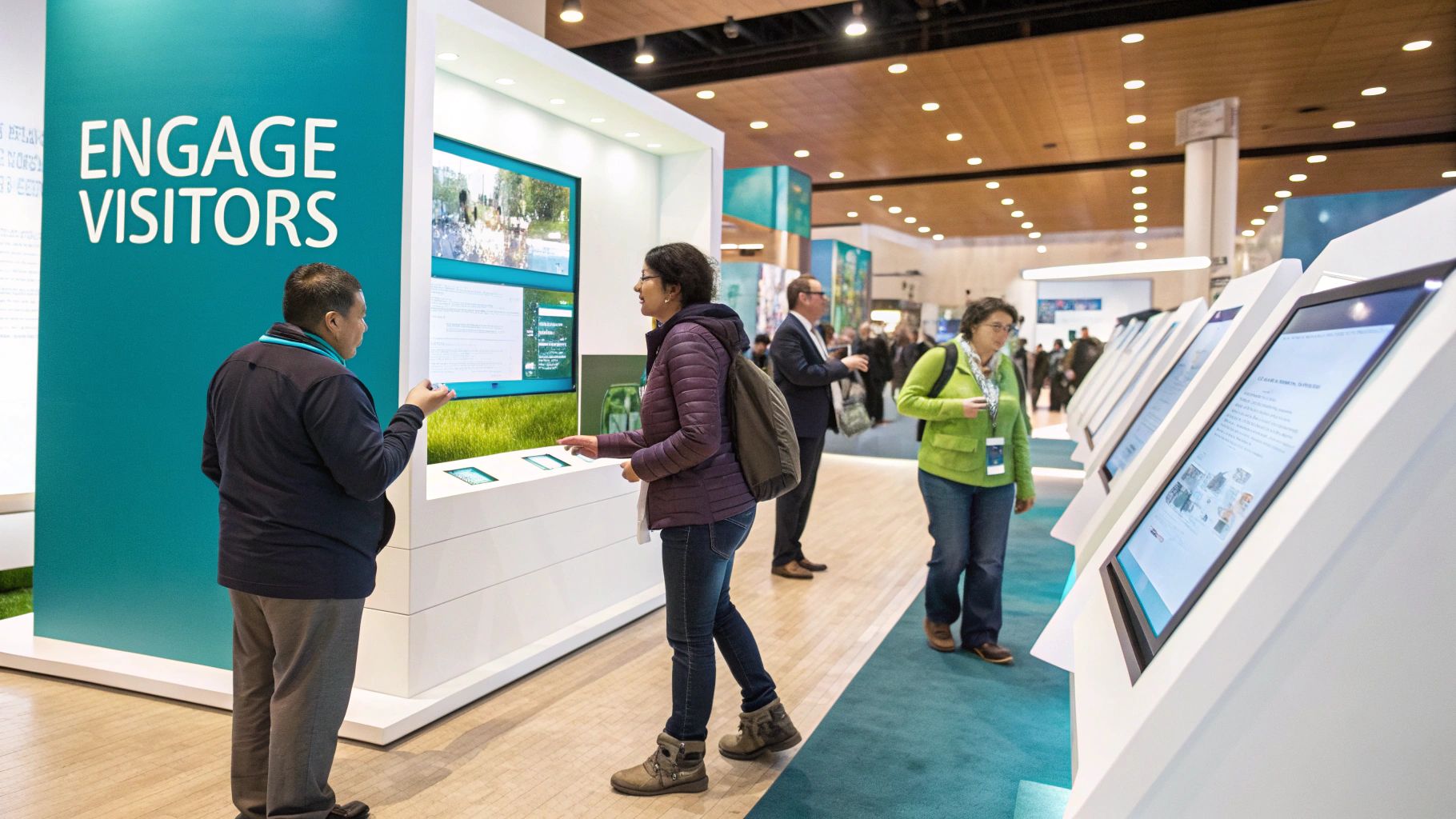
Think of a crowded trade show floor as a sea of noise and distraction. Your booth is your lighthouse. A generic, uninspired display will just blend into the background. But a thoughtfully designed one? It becomes a magnet, pulling attendees out of the chaotic aisles and into your world.
Your exhibit is much more than just a place for your team to stand. Its real job is to stop traffic, tell your story in a matter of seconds, and create a space where real conversations can happen. This is a core part of your trade show marketing strategy, and it’s where design and purpose have to work together perfectly.
Aligning Booth Design With Your Core Objectives
The best booth designs are born from strategy, not just pretty pictures. Before you even think about colors or graphics, you need to tie the physical design directly back to the goals you've already set. The form of your booth must always follow its function.
For instance, if your number one goal is aggressive lead generation, you'll want a booth that's open and easy to walk into. It needs clear entry points and multiple stations for quick chats and badge scans. A closed-off, lounge-style setup would completely sabotage that goal.
On the other hand, if you're trying to build deep relationships with a handful of high-value clients, that exclusive lounge concept could be exactly what you need. It signals a more personal approach and gives you a comfortable spot for those important, in-depth discussions.
A great booth answers three questions for an attendee in under five seconds: Who are you? What do you do? And why should I care? If your design fails that test, even the most amazing product will get lost in the noise.
Thinking through these strategic points is absolutely critical. To get a better sense of what's possible, it's worth exploring how strategic trade show booth design can bring your specific goals to life.
Key Elements of an Engaging Booth Experience
Once your layout supports your goals, you can zero in on the sensory and interactive details that make an exhibit stick in someone's mind. You’re not just building a display; you’re creating an experience.
Here are a few elements that are essential for turning heads and keeping people engaged.
Visual Hierarchy and Messaging
Your graphics have one job: to communicate your message instantly. A clear visual hierarchy is how you guide an attendee’s eye to the most important information first.
- High-Level Branding: Your logo and company name need to be big, bold, and high up. Think hanging signs or the top of a back wall, visible from across the hall.
- Core Value Proposition: At eye level, you need a short, punchy headline that screams the benefit you offer. What problem do you solve?
- Supporting Details: The finer points, like features or testimonials, can be placed lower down, where people can read them once they've already stepped into your space.
Strategic Lighting
Never underestimate the power of good lighting. It does more than just make things visible—it sets a mood, highlights what’s important, and makes your entire display pop. Backlit fabric displays, for example, can make your graphics literally glow, drawing eyes from clear across the room. Use spotlights to pinpoint key products or demo stations, telling visitors exactly where you want them to look.
Interactive Technology
Giving people something to do is one of the best ways to get them to stop. This doesn't mean you need a full-blown virtual reality setup; simple interactive elements work wonders.
- Touchscreen Displays: Let visitors browse your products, watch customer success stories, or take a quick quiz about their own business challenges.
- Product Demos: Nothing sells a product like seeing it work. Schedule live demos throughout the day to build a bit of buzz and draw a crowd.
- Gamification: A simple "spin-to-win" prize wheel or an interactive game with a leaderboard creates a fun, low-pressure way for people to engage with your brand. It's the perfect icebreaker for your staff.
Turning Leads into Revenue with Post-Show Follow-Up
When the last crate is packed up and the lights go out, the real work begins. It’s easy to think the trade show is over, but in reality, the most important part of your trade show marketing strategy is just kicking off. All the energy you poured into designing the booth, promoting your presence, and engaging attendees can go to waste if you drop the ball now.
This is, hands down, the biggest mistake many companies make. The adrenaline from the show fades, and those hard-earned leads get dumped into a spreadsheet, never to be seen again.
Consider this: a shocking 80% of trade show leads are never followed up on. And to make matters worse, 50% of buyers end up going with the vendor that gets back to them first. (Source)
The 48-Hour Rule: Speed and Relevance Win
As soon as that show floor closes, a timer starts. For every person who stopped by your booth, the memory of your conversation and your product demo is already starting to fade. Your mission is to get back in touch while their interest is still high and the memory is fresh.
This is where the 48-hour rule comes into play. You absolutely must reach out to every single lead with some form of personalized communication within two business days. This first touchpoint does more than just say hello—it sets the tone for your entire relationship and instantly puts you ahead of the disorganized competition.
Building a Multi-Touch Follow-Up Cadence
Firing off a single email and hoping for the best isn't a strategy; it's a lottery ticket. What you need is a structured, multi-touch follow-up plan that turns a scanned badge into a genuine sales conversation. The key is to mix up your communication channels and offer more value with each step.
Here’s a simple but effective framework you can steal and adapt:
-
The Immediate Thank You (Within 24 Hours): Send a personal email thanking them for their time. The secret sauce? Mention something specific you talked about. It shows you were listening and weren't just scanning badges. The goal isn't to sell; it's to refresh the connection.
-
The Value-Add Email (2-3 Days Later): Now, follow up with something genuinely useful based on their needs. If they were curious about a specific product, send a case study. If they mentioned a particular business challenge, share a whitepaper or blog post that tackles it.
-
The Warm Phone Call (4-5 Days Later): You've reconnected and provided value, so now it's time to pick up the phone. This isn't a cold call. It’s a warm conversation to see if they had questions about the resources you sent and to feel out the next steps.
-
The Social Connection (Week 2): For your most promising leads, send a connection request on LinkedIn. It's a low-pressure way to stay on their radar and opens up another line of communication.
This kind of structured approach keeps you top-of-mind without being annoying. You're nurturing the relationship until they're ready for a serious sales discussion.
Measuring and Optimizing Your Follow-Up Success
Your follow-up process shouldn't feel like you're shouting into the void. To prove the real value of your trade show investment, you have to track your results. By tagging every lead from the event in your CRM, you can watch the entire journey unfold.
Keep a close eye on these key metrics:
- Response Rates: Are people actually opening and replying to your emails?
- Meeting Conversion Rates: How many leads are agreeing to a demo or a follow-up call?
- Pipeline Contribution: How much potential revenue did this single event add to your sales pipeline?
- Closed-Won Deals: The bottom line—what’s the final ROI from deals that started at this show?
This data tells you exactly what’s working and what’s not. It helps you tweak your messaging, improve your on-site lead capture strategies, and build an undeniable, data-driven case for next year's trade show budget. If you're looking to improve how you gather information on-site, check out our guide on more effective lead capture strategies.
Your trade show strategy comes to life the moment an attendee sees your booth. At Storm Displays, we help businesses across the country build stunning, purpose-driven exhibits—from versatile custom booths to eye-catching backlit displays—that stop people in their tracks and get results. Let's create an experience that truly performs.